Modal vs. Chiffon vs. Bamboo Jersey: How to Choose the Right Hijab Fabric
Fabric Changes More Than the Look
When choosing a hijab, colour often gets the first question: Which shade should I buy? Fabric deserves the same attention.
Two hijabs can be the same colour and still behave completely differently. One may stay in place with very little effort. Another may need an undercap and a few careful adjustments. One may create a soft, fluid drape, while another holds a more defined shape around the face.
That difference matters because the right hijab is not simply the one that looks beautiful in a photograph. It is the one that works with your routine, your outfit, and the amount of styling you actually want to do.
Modal, chiffon, and bamboo jersey are three fabrics that can each earn a place in a hijab wardrobe, but they serve different purposes. Understanding those differences can save you from buying a scarf that looks perfect online but spends most of its life folded in a drawer.
The best place to start is not with a trend. Start with how you actually dress.
Bamboo Jersey: The Easy Everyday Option
Bamboo jersey is often the easiest place to start if you want a hijab that feels practical and forgiving.
The fabric has natural stretch and a comfortable amount of grip, which helps it stay in place. That can be especially useful on busy mornings, during commuting, while travelling, or on days when you simply do not want to spend much time adjusting your scarf.
It also has more body than very lightweight fabrics, so the drape tends to look relaxed rather than extremely floaty. That makes it a natural match for everyday clothes such as jeans, knitwear, long cardigans, relaxed trousers, and simple dresses.
Another advantage is the way jersey handles movement. If you are constantly taking your coat on and off, walking around the city, or moving through a long day at work, a fabric with some give can feel much easier to live with.
For someone learning how they like to wrap a hijab, that forgiving quality can be valuable. You can experiment with folds, volume, and different silhouettes without feeling that one small movement has ruined the whole style.
Bamboo jersey is therefore less about creating a dramatic occasion look and more about making everyday dressing straightforward. It is the kind of fabric many people reach for when comfort and reliability matter just as much as appearance.
Modal: Soft, Fluid, and Easy to Dress Up
Modal sits in a useful middle ground between casual practicality and a more polished finish. exploring a modal hijab collection can also be a useful way to compare everyday colours and styling options.
It has a soft, smooth feel and a fluid drape that can make a simple outfit look considered without making it feel overly formal. Compared with chiffon, modal is generally easier to manage for everyday wear. Compared with a grippier jersey, it creates a softer and more flowing silhouette.
That combination makes modal particularly versatile. The same scarf can work with a work outfit in the morning, a coffee meeting in the afternoon, and dinner later in the evening without looking out of place.
Modal also works beautifully with tonal dressing. Imagine a cream knit with a warm beige hijab, charcoal trousers with a soft grey scarf, or an olive jacket paired with a muted green. The result feels coordinated without looking as though every piece was bought as a matching set.
The fabric can also soften structured clothing. A tailored blazer, crisp shirt, or long coat can feel more relaxed when paired with a flowing modal hijab.
For anyone who wants fewer scarves that can do more jobs, modal is worth considering. It can bridge the gap between an everyday staple and something that feels slightly elevated.
It is also a useful fabric for building a colour collection. Once you find a few modal shades that work with your wardrobe, you can create many different combinations without changing the overall character of your style.
Chiffon: Light, Airy, and Occasion-Friendly
Chiffon has a very different personality.
It is lightweight and creates a soft, elegant drape. That makes it a natural choice for weddings, Eid gatherings, dinners, celebrations, and other occasions where you want an outfit to feel a little more special.
The trade-off is that chiffon is smoother and more likely to move than a grippy jersey. An undercap can help create a secure base, while magnets or other suitable fastening methods can make styling easier.
Chiffon is particularly useful when you want movement. The fabric can create gentle folds around the face and shoulders, and it can add a lighter visual layer to an outfit that already has structure.
That quality also makes chiffon useful for formal clothing. A flowing abaya, long dress, tailored suit, or embellished outfit can benefit from a hijab that feels delicate rather than heavy.
It does not have to be reserved for major celebrations, either. A simple chiffon hijab in a neutral colour can look understated with a monochrome outfit. The key is understanding that it may require a little more styling attention than jersey.
If you enjoy creating a polished look and do not mind spending a few extra minutes on the wrap, chiffon can bring a graceful finish that is difficult to replicate with a heavier fabric.
So Which Fabric Should You Choose?
There is no single fabric that works best for every hijab wearer. The more useful question is: which fabric makes sense for the way you live and dress?
Choose bamboo jersey when you want grip, comfort, stretch, and a low-maintenance everyday option. It is particularly useful for casual outfits, long days, travel, and anyone who prefers a secure feel.
Choose modal when you want a soft, fluid fabric that can move between everyday, professional, and slightly dressier settings. It is a strong choice for a wardrobe that needs versatility.
Choose chiffon when the occasion calls for a lighter, more delicate drape and you are comfortable using an undercap or another secure fastening method. It can add movement and elegance to occasionwear.
And if your wardrobe includes formal events, satin or satin-silk can provide another option altogether. Their smoother surface and subtle sheen can change the mood of an outfit, particularly in evening settings.
Instead of asking which fabric is objectively best, think about where you will wear it, how you like your hijab to sit, how much styling time you have, and what fabrics you already enjoy wearing.
A fabric that is perfect for one person’s morning routine may be frustrating for someone else’s.
Think About Your Routine Before Buying
A hijab can look beautiful and still be the wrong choice for your lifestyle.
If your mornings are rushed, a fabric that needs constant adjustment may become frustrating. If you spend long hours at work, comfort and a secure fit may matter more than a dramatic finish. If you attend frequent celebrations, having a few occasion-friendly fabrics can give your wardrobe more range.
Think about how often you move during the day. Someone who works at a desk may have different needs from someone who is travelling between meetings, caring for children, studying, or spending much of the day outdoors.
Climate matters as well. Warm weather often makes lightweight, comfortable, breathable-feeling fabrics more appealing, while cooler weather can give you more freedom to experiment with layers and different textures.
Your existing wardrobe matters too. If most of your clothes are relaxed and casual, a collection dominated by very formal fabrics may not get much use. If you regularly wear tailored clothing, dresses, and occasion pieces, having a few softer or more polished options can make styling easier.
Before buying a new scarf, picture three real outfits you already own. If you can imagine the hijab working naturally with all three, it is more likely to become a useful part of your wardrobe rather than another rarely worn purchase.
Consider the Way You Like Your Hijab to Drape
Fabric choice also changes the shape of the final wrap.
Some people like a clean, close-to-the-face style with minimal volume. Others prefer a softer silhouette with folds around the neck and shoulders. Some like a longer tail at the front, while others prefer an even, symmetrical drape.
Bamboo jersey tends to be helpful when you want the fabric to stay where you put it. Its stretch can make it easier to create a secure everyday wrap.
Modal is useful when you want movement without losing a polished appearance. It can be folded and layered to create a softer frame around the face.
Chiffon is particularly effective when you want lightness and flowing folds. Because it is smoother, however, it can require more attention while styling.
This is one reason a photograph of a hijab does not tell the whole story. The same wrap technique can look noticeably different depending on the material.
If you already know your favourite hijab style, work backwards. Ask which fabrics naturally support that shape. You may discover that you do not need to learn a completely new way of wrapping; you simply need a material that behaves in the way you prefer.
Colour and Fabric Work Together
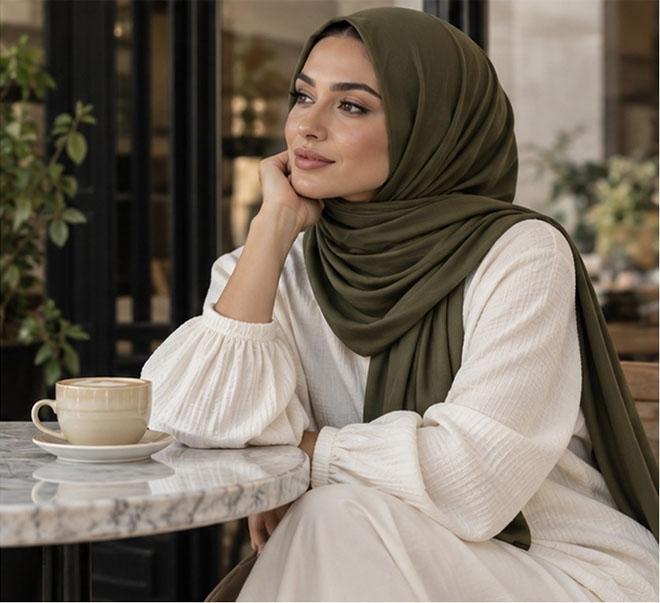
The same colour can give a very different impression depending on the fabric.
Black chiffon can feel formal and evening-ready. Black bamboo jersey can look much more relaxed. A warm beige in modal may feel polished and understated, while a similar shade in a more textured material can feel casual and earthy.
This is why it can be helpful to think about fabric before building a full colour collection.
Start with the colours you wear most. Then decide which material makes the most sense for each one. A neutral bamboo jersey might become an everyday staple, while the same wardrobe could use chiffon in a richer shade for special occasions.
There is also something to be said for repeating a colour across different fabrics. Imagine owning one soft brown modal for work, a brown jersey for casual days, and a deeper brown chiffon for occasions. The colours connect the wardrobe while the different textures keep it interesting.
If you are unsure which colours to buy, look at the colours already appearing in your clothes. Your most useful hijab shades are often hiding in your existing wardrobe: the beige that works with your trousers, the olive that repeats in your outerwear, or the soft pink that picks up a favourite dress.
Once you have a better idea of which fabrics suit your wardrobe, the next step is choosing colours and styles that fit your everyday routine. You can explore Hijab Elegance’s hijab collections to compare different fabrics, colours, and styles in one place.
Think About Undercaps and Accessories
Fabric is only one part of how a hijab performs. The accessories you use can change the experience as well.
An undercap can provide a more secure base, particularly with smoother fabrics. Magnets can make it easier to fasten a scarf without creating the bulk that some pins can leave behind. A simple hijab cap can also help create a consistent foundation from one day to the next.
This does not mean every hijab requires a collection of accessories. In fact, it is often better to find the simplest setup that works for you.
For a grippier jersey, you may need very little. For chiffon, you may prefer an undercap and a secure fastening method. Modal can sit somewhere between the two depending on the wrap and the look you want.
Accessories can also help you use the same fabric in different ways. A scarf that feels casual in one wrap may look more polished with a different fold, undercap, or fastening technique.
The important thing is to build around your habits. If an accessory makes your morning routine easier, it is useful. If it creates another step that you never enjoy, it probably does not need to be part of your everyday system.
You Do Not Need a Huge Hijab Collection
It is tempting to think that a complete hijab wardrobe means owning every colour in every fabric.
In practice, a smaller collection can be much more useful.
Start with two or three colours that work with most of your clothes. Then choose fabrics based on how you spend your time. For many people, that might mean a couple of everyday jerseys or modals and one or two dressier chiffon options.
You can build from there based on actual wear rather than imagined outfits.
Pay attention to what you reach for over a few weeks. If one fabric keeps coming back into rotation, that tells you something. If a scarf looks beautiful but never leaves the wardrobe, that is useful information too.
A practical collection might eventually include:
- an everyday neutral in bamboo jersey;
- one or two versatile modal shades;
- a darker or richer neutral for polished outfits;
- a chiffon option for occasions;
- and, if it suits your wardrobe, one satin or satin-silk scarf for formal evenings.
There is no need to follow this list exactly. The point is to give each scarf a purpose.
A wardrobe becomes easier to manage when you know why each piece is there.
Think About Care and Longevity
The best fabric choice also considers what happens after you buy the hijab.
Different materials can have different care needs, so it is worth checking the manufacturer’s care instructions rather than treating every scarf in exactly the same way.
A little care can make a noticeable difference. Avoiding unnecessary heat, storing scarves so they are not crushed for long periods, and giving delicate fabrics enough space can help them maintain their appearance.
It is also useful to think about how often a scarf will be worn. An everyday hijab may naturally need more frequent washing than an occasion piece. That makes durability and easy care more important for your everyday collection.
This is another reason not to buy solely based on appearance. A beautiful fabric that fits your lifestyle and care routine is much more likely to remain a favourite.
When you find a material that feels good, styles easily, and holds up well to your routine, you have learned something valuable about your own wardrobe. Future purchases become easier because you are no longer starting from zero.
Match the Fabric to the Occasion
A useful way to simplify hijab shopping is to think in terms of situations rather than an endless list of colours.
For work, modal is often a comfortable middle ground because it can look polished without feeling too formal. Bamboo jersey can also work well when your workplace is more relaxed or when comfort is a priority.
For weekends and everyday errands, bamboo jersey can be an easy choice. Pair it with relaxed tailoring, denim, long cardigans, sneakers, or simple dresses.
For dinners and celebrations, chiffon can add a lighter, more elegant quality. A satin or satin-silk hijab can also work when you want subtle shine.
For travel, practicality usually matters. A fabric that is easy to adjust, comfortable for long periods, and compatible with several outfits can earn its place in your carry-on.
Thinking this way prevents the common problem of owning beautiful scarves that all suit the same occasion. A varied collection should not simply contain different colours. It should contain different solutions.
The Right Fabric Makes Styling Easier
A good hijab fabric should work with you.
That does not mean every scarf needs to be completely effortless. Styling is part of the fun, and learning how a material moves can be part of developing your personal style. But when the fabric suits the occasion and your preferred way of wearing it, you spend less time fighting with the material.
Bamboo jersey can simplify everyday dressing. Modal can bring softness and polish. Chiffon can add movement and occasion-ready elegance. Satin and satin-silk can introduce a more luminous finish when you want something formal.
Over time, you may find that your favourite fabric says something about the way you like to dress. Perhaps you prefer the security of jersey and keep your styling minimal. Perhaps you love the movement of chiffon and enjoy experimenting with folds. Or perhaps modal becomes your default because it fits almost everything in your wardrobe.
There is no right answer.
The most useful hijab wardrobe is one that reflects your real life. Once you understand how fabric affects comfort, drape, colour, styling, and occasion, choosing a scarf becomes much less complicated.
Instead of buying whatever looks appealing in the moment, you can choose with a clear purpose. And that usually leads to a smaller, more versatile collection, one where the scarves you own are actually the scarves you want to wear.


Leave a Comment