Bridesmaid Dress Trends Are Becoming More Personal
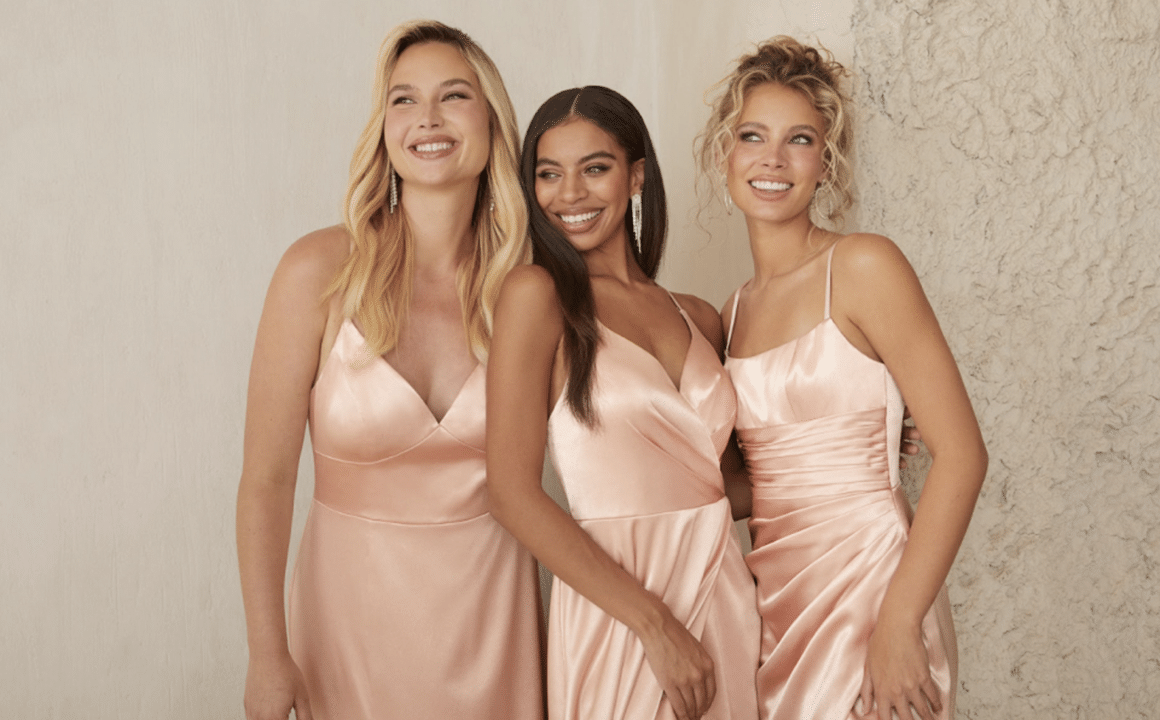
For years, bridesmaid fashion followed a fairly predictable formula: one color, one silhouette, one look repeated across the entire bridal party. While this created uniformity in a wedding party, it often left very little opportunity for bridesmaids to express their individual style.
That approach is changing.
Today’s bridesmaid style is becoming much more personal. And that shift says something bigger about where fashion is heading. Personal style doesn’t disappear when we dress for a special occasion. If anything, it’s becoming part of the celebration.
The Rise of the Individual Bridesmaid Look
One of the biggest changes in bridesmaid fashion is the move away from complete uniformity.
Instead of choosing one dress for everyone, couples are increasingly building a visual framework: perhaps a shared color family, fabric, length, or overall mood. Bridesmaids can then choose details that reflect their own style within that framework.
It’s easy to see the appeal when browsing modern collections of bridesmaid dresses, where a single wedding palette can extend across A-line, one-shoulder, strapless, off-the-shoulder, and convertible designs.
That variety allows someone who loves minimalist fashion to choose a sleek silhouette, while another bridesmaid might gravitate toward romantic draping, a dramatic neckline, or a softer, movement-focused shape.
The dresses still belong together. They simply don’t have to be identical.
Mismatched Doesn’t Mean Uncoordinated
The mismatched bridesmaid trend might sound effortless, but the strongest looks usually have one element holding everything together.
Color is perhaps the easiest starting point. Dressing everyone in variations of dusty blue, sage, champagne, burgundy, or another carefully selected palette creates consistency even when silhouettes differ.
Another popular approach is keeping the color consistent while changing the cut. One bridesmaid might prefer an A-line gown, another a strapless style, and another an off-the-shoulder design. Because the palette connects them, the overall effect still feels intentional.
Texture is also playing the same role. Stretch satin creates a polished, luminous finish, while chiffon introduces softness and movement. Using one fabric throughout a bridal party—or thoughtfully mixing two complementary materials—can establish a clear visual language without making everyone look the same.
The key is choosing a point of connection. Once that visual anchor is established, individual styling choices have much more room to breathe.
Color Is Becoming a Form of Personality
Bridesmaid color palettes are also getting more expressive.
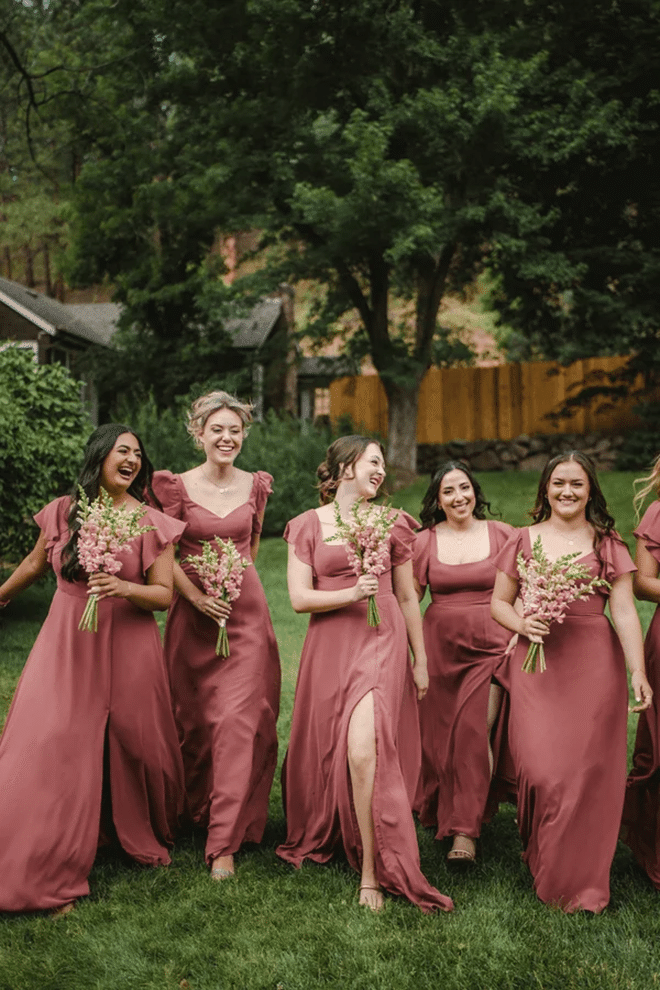
Soft shades such as powder blue, dusty rose, sage, and other nature-inspired tones continue to suit romantic celebrations, but richer colors bring an entirely different personality. Emerald, burgundy, black, and other saturated hues can instantly make a bridal party feel more dramatic or fashion-forward.
The choice is no longer simply about matching the flowers or venue. Color helps establish the emotional character of the wedding.
A soft blue palette can feel airy and serene. Deep green can feel sophisticated and grounded. Black offers a sleek, modern quality, while pink tones can move anywhere from understated romance to playful femininity depending on the shade and styling.
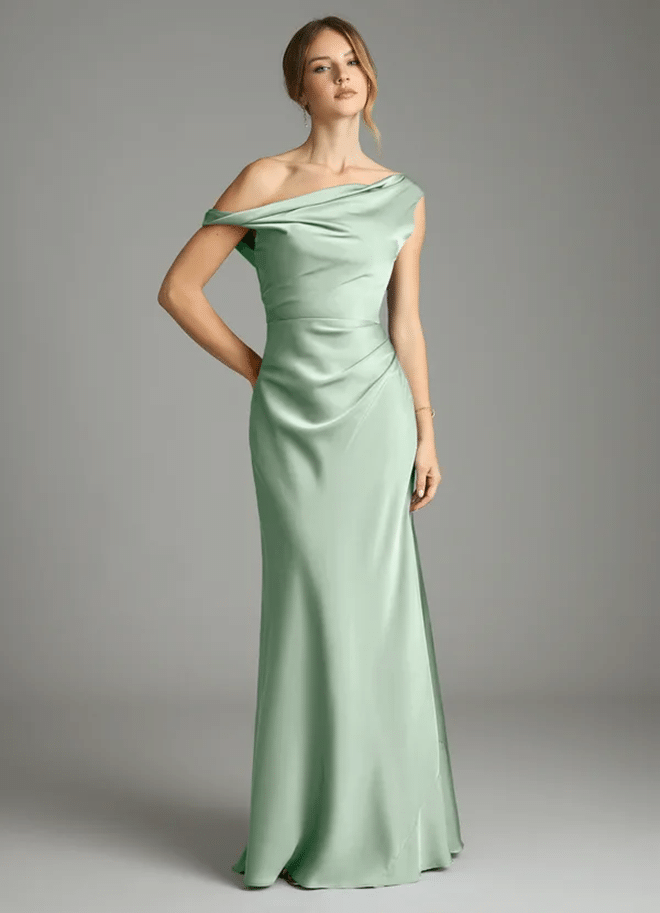
There’s also room to experiment within a color family. Instead of selecting one exact shade, a bridal party might combine several related tones to create a subtle gradient. Greens can move from pale sage into richer botanical shades, while pinks can transition from barely-there blush to deeper rose.
This tonal approach makes the overall look feel curated rather than uniform—and gives bridesmaids another opportunity to choose a shade that feels natural to them.
Silhouettes That Feel Like You
Perhaps the most important part of this shift is recognizing that confidence rarely comes from putting several different people into exactly the same silhouette. Bodies are different. So are personal preferences.
One bridesmaid may feel amazing in a strapless gown, while someone else feels most comfortable in a flowing A-line dress. Some prefer sleeves or higher necklines; others love open shoulders, asymmetric cuts, or dramatic slits.
Modern bridesmaid dress fashion makes room for those differences. Convertible and adjustable designs also offer another route to personalization. They can help create visual consistency while allowing individual bridesmaids to customize certain elements of the fit or styling.
Rather than treating those differences as styling problems to solve, the new approach makes them part of the final look. And that may be one of the most significant developments in bridesmaid fashion: coordination no longer needs to come at the expense of comfort or personality.
Fabric Is Part of the Fashion Story, Too
Silhouette and color may get most of the attention, but fabric can completely change the personality of a dress.
Chiffon has long been associated with bridesmaid style for good reason. Its lightness creates movement, making it especially suited to outdoor ceremonies, garden settings, and romantic wedding aesthetics.
Satin delivers something different. Its smooth finish catches the light and can give even a relatively simple silhouette an elevated eveningwear quality. It works particularly well when the goal is polished, modern, or slightly glamorous.
Mixing textures can also create dimension within a bridal party. Instead of relying only on different colors, combining complementary fabrics allows each look to feel distinctive while remaining connected to the overall aesthetic. This is where bridesmaid dressing starts to feel less like following a prescribed uniform and more like styling a fashion collection.
From Wedding Uniform to Wearable Fashion
There’s another reason bridesmaid style feels different now: the dresses increasingly resemble pieces someone might genuinely choose for herself.
That shift matters because the best bridesmaid dress shouldn’t only look good in a group photo. It should make the person wearing it feel comfortable, confident, and recognizable as herself.
Personal accessories reinforce the idea. Minimal jewelry can give a dress a clean, contemporary finish, while statement earrings or a bold shoe can introduce more personality. Hairstyles can vary in the same way: there’s no rule saying every bridesmaid needs the same updo to look cohesive.
The New Definition of a Cohesive Bridal Party
The modern bridal party isn’t necessarily perfectly matched. It’s thoughtfully connected.
A shared palette can provide consistency. Similar fabrics can establish texture. Coordinated lengths can create balance. From there, individuality can come through silhouettes, necklines, accessories, hairstyles, and the way each person chooses to wear the look.
And perhaps that is why this evolution of bridesmaid fashion feels so current. Weddings are deeply personal celebrations, and the people standing beside the couple bring their own personalities to that story. Their clothes can do the same.
Ultimately, the latest direction in bridesmaid dress fashion is all about redefining what coordination can look like. When bridesmaids have space to express their individual style while still belonging to a larger visual story, the result can feel more modern, more authentic, and much more memorable.


Leave a Comment